
Interactive Display vs Traditional Exhibition Booth: Which Drives More Engagement?
Trade shows and exhibitions remain one of the most effective ways for brands to connect with potential customers. However, as visitor expectations continue to change, many companies are asking an important question:
Should we invest in an interactive display or stick with a traditional exhibition booth?
While traditional booths have been a standard part of exhibitions for many years, interactive technology is transforming how brands attract, engage, and connect with visitors.
In this article, we will compare interactive displays and traditional exhibition booths to help you choose the right solution for your next event.
What Is a Traditional Exhibition Booth?
A traditional exhibition booth typically includes:
- Printed banners and backdrops
- Product displays
- Brochures and flyers
- Sales representatives
- Static marketing materials
The main purpose of a traditional booth is to showcase products and provide information to visitors.
While traditional booths can still be effective, they often rely heavily on booth staff to initiate conversations and attract attendees.
What Is an Interactive Display?
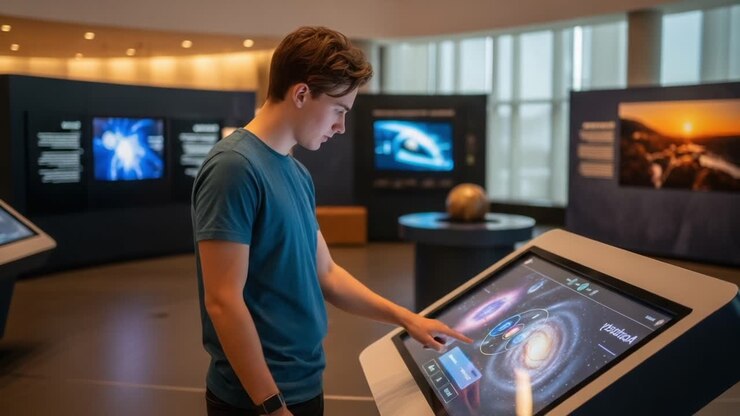
An interactive display uses digital technology to create a more engaging visitor experience.
Examples include:
Touchscreen kiosks
Interactive walls
Gesture-based experiences
Gamification solutions
Interactive product showcases
AI-powered concierge systems
Instead of simply viewing information, visitors actively participate in the experience.
This creates a stronger connection between the visitor and the brand.
Visitor Attention Is More Competitive Than Ever
At large exhibitions and trade shows, attendees are surrounded by hundreds of booths competing for attention.
Traditional booths often depend on:
Attractive booth designs
Product samples
Promotional giveaways
However, interactive displays create curiosity naturally.
When visitors see other attendees interacting with a game, touchscreen, or digital experience, they are more likely to stop and explore.
This can significantly increase booth traffic and visitor engagement.
Interactive Displays Encourage Active Participation
One of the biggest differences between traditional booths and interactive displays is the level of participation.
Traditional booths are mostly passive.
Visitors:
Walk past the booth
Read information
Talk to a sales representative
Interactive displays are active.
Visitors:
Touch screens
Play games
Answer quizzes
Explore products digitally
Participate in challenges
The more actively people engage with a brand, the more memorable the experience becomes.
Better Data Collection Opportunities
Many traditional booths rely on manual lead collection methods.
For example:
Business cards
Paper forms
Manual registration
Interactive displays can automate this process.
Brands can collect:
Visitor names
Email addresses
Phone numbers
Product interests
Survey responses
This helps marketing and sales teams follow up more effectively after the event.
For businesses that focus on lead generation, this can be a major advantage.
Increased Dwell Time
Dwell time refers to the amount of time visitors spend at your booth.
The longer visitors stay, the more opportunities you have to communicate your message.
Traditional booths often struggle to keep visitors engaged for long periods.
Interactive experiences encourage visitors to stay longer because they are actively participating.
Whether it is an interactive game, product demonstration, or digital experience, visitors are more likely to spend additional time exploring your brand.
Social Media and Word-of-Mouth Benefits
Interactive experiences are often more shareable than traditional booth setups.
Visitors frequently take photos and videos of:
Interactive walls
Gamified experiences
Digital installations
Immersive technology
This can generate additional exposure beyond the exhibition itself.
In many cases, attendees become brand advocates by sharing their experiences online.
When a Traditional Exhibition Booth May Still Be the Better Choice
Despite the benefits of interactive technology, traditional booths can still be effective in certain situations.
For example:
Small industry events
Limited budgets
Highly technical B2B meetings
Relationship-focused networking events
If your primary goal is to hold scheduled meetings with existing clients, a traditional booth may be sufficient.
When Interactive Displays Deliver the Greatest Value
Interactive displays are especially effective when your goals include:
Increasing booth traffic
Generating leads
Launching new products
Building brand awareness
Creating memorable experiences
Encouraging audience participation
For companies looking to stand out in crowded exhibitions, interactive technology can provide a significant competitive advantage.
Interactive Display vs Traditional Exhibition Booth: Final Comparison
Criteria | Traditional Booth | Interactive Display |
|---|---|---|
Visitor Attraction | Moderate | High |
Audience Participation | Low | High |
Data Collection | Manual | Automated |
Visitor Dwell Time | Shorter | Longer |
Brand Memorability | Moderate | High |
Social Sharing Potential | Low | High |
Lead Generation Capability | Moderate | High |
Final Thoughts
The choice between an interactive display and a traditional exhibition booth depends on your event objectives.
If your goal is simply to showcase products and conduct meetings, a traditional booth may be enough.
However, if you want to increase visitor engagement, collect qualified leads, and create memorable brand experiences, interactive displays offer significant advantages.
As exhibitions become more competitive, brands that create interactive and immersive experiences are often the ones that attract the most attention and generate the strongest results.
Looking to enhance your next exhibition or trade show in Singapore?
Explore how interactive displays, gamification, AI concierge solutions, and digital engagement technologies can help your brand stand out and connect with visitors more effectively.