
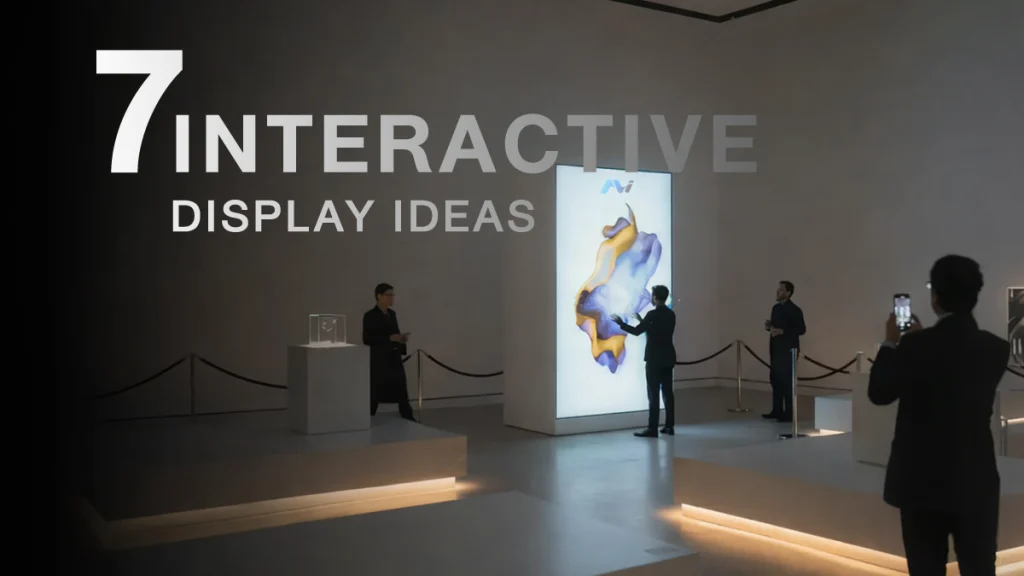
Digital screens are everywhere today, but not all displays capture attention. In busy environments such as shopping malls, exhibitions, and public venues, traditional screens often become part of the background. Visitors walk past without noticing them.
Interactive displays change that dynamic completely.
Instead of passively watching content, users can touch, explore, and interact with digital experiences in real time. This simple shift—from passive viewing to active participation—dramatically increases engagement and information retention.
Research in digital signage and experiential marketing consistently shows that interactive experiences attract longer dwell times and stronger audience engagement compared to static displays.
In this article, we explore seven proven interactive display ideas used by brands and venues to capture attention, communicate information effectively, and create memorable experiences.
What Is an Interactive Display?
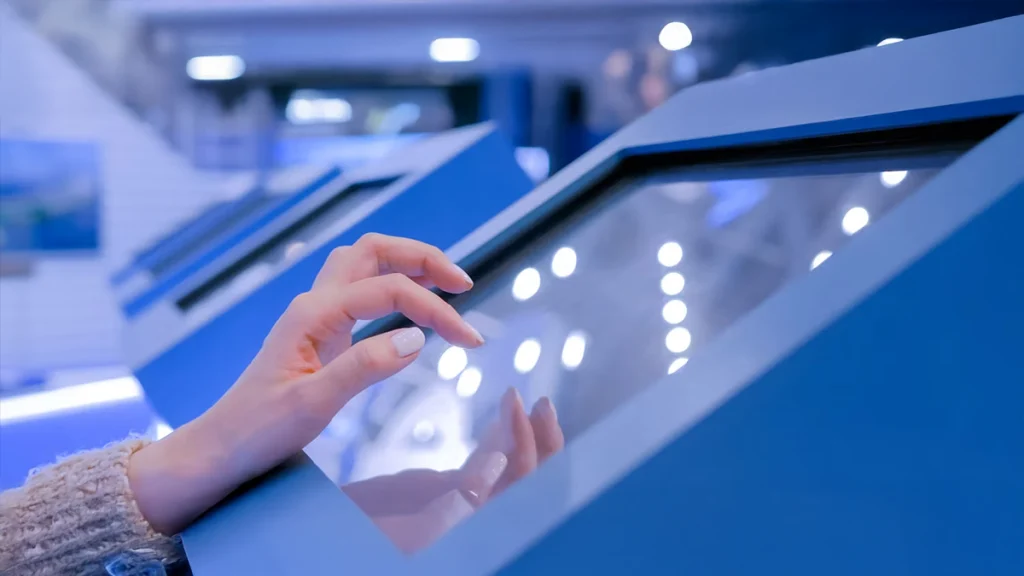
An interactive display is a digital screen that allows users to engage directly with content through touch, motion sensors, gesture tracking, or mobile integration.
Unlike traditional digital signage that simply shows information, interactive systems invite participation.
Common examples include:
- Touchscreen kiosks
- Interactive walls
- Motion-based installations
- Gamified marketing displays
- AI-powered information assistants
These technologies are commonly used in retail environments, exhibitions, museums, airports, and corporate spaces where audience engagement is important.
Why Interactive Displays Are More Effective
Traditional screens rely on passive viewing. People see the content only if they choose to pay attention.
Interactive displays work differently.
They trigger curiosity.
When visitors see a screen responding to movement or inviting them to touch, they naturally approach and explore. This creates a moment of engagement where brands can communicate messages more effectively.
Interactive installations can also:
- Increase dwell time in retail environments
- Improve product discovery
- Deliver personalized information
- Create memorable brand experiences
- Encourage social sharing
Because of this, interactive displays are increasingly used in experiential marketing campaigns and modern retail environments.
1. Touchscreen Product Exploration Kiosks
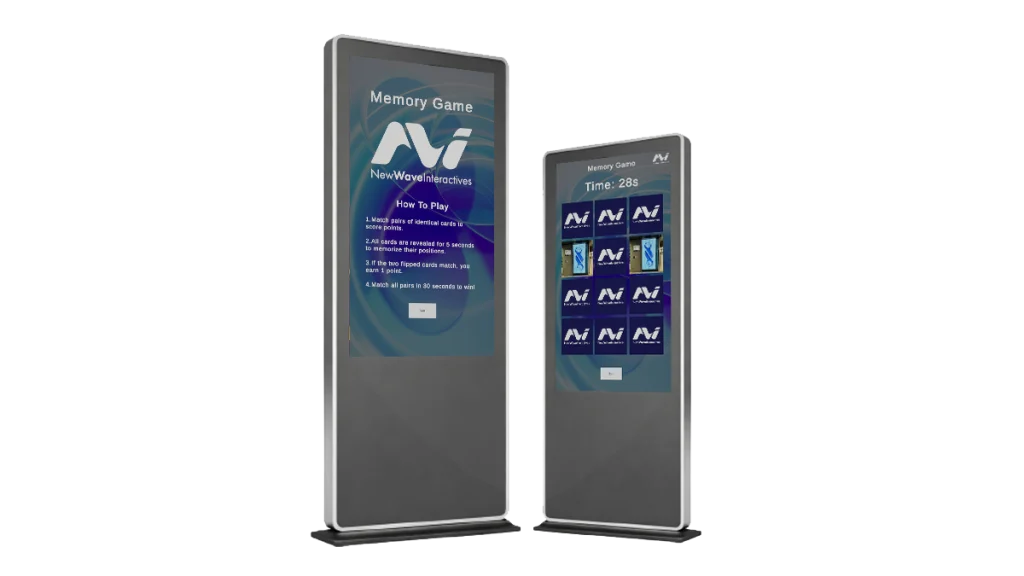
Touchscreen kiosks are one of the most common interactive display solutions.
These installations allow visitors to browse products, explore features, or learn more about services through an intuitive touch interface.
For example, in retail stores a touchscreen display can allow customers to:
- View product details
- Compare specifications
- Watch product demonstrations
- Check inventory availability
This reduces the need for staff assistance while improving the overall shopping experience.
Touch kiosks are especially useful in showrooms, technology stores, and exhibition booths where visitors want to explore information independently.
2. Interactive Walls for Immersive Experiences
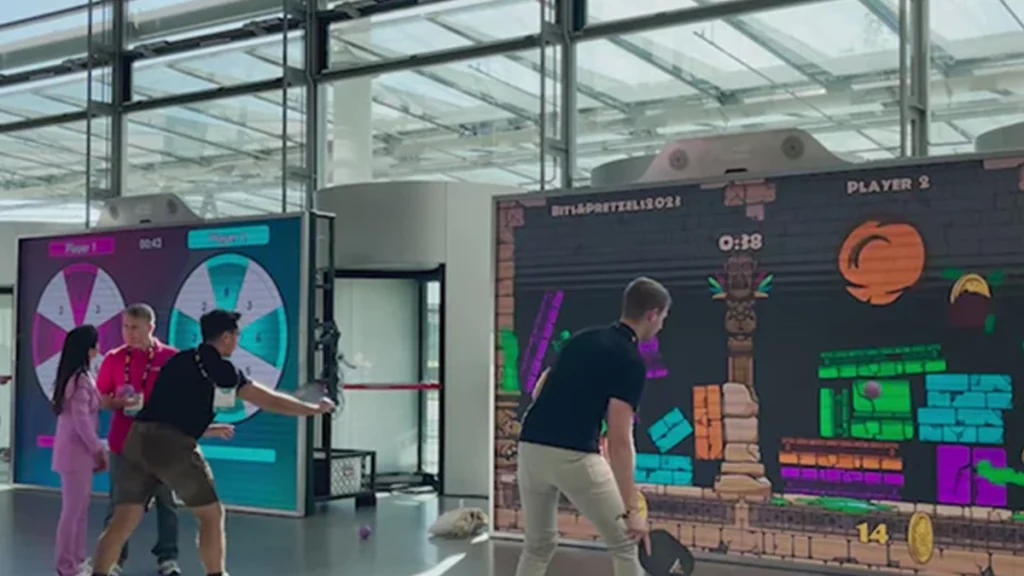
Large interactive walls transform ordinary spaces into engaging digital environments.
Instead of a single screen, an entire wall becomes a responsive interface where users can interact with visuals through touch or movement.
Interactive walls are often used in:
- Museums
- brand exhibitions
- shopping malls
- corporate experience centers
For example, a brand exhibition might use a large interactive wall to showcase its history, allowing visitors to tap different moments in time and explore stories through multimedia content.
Because of their scale and visual impact, interactive walls are highly effective for storytelling.
3. Gamified Marketing Displays
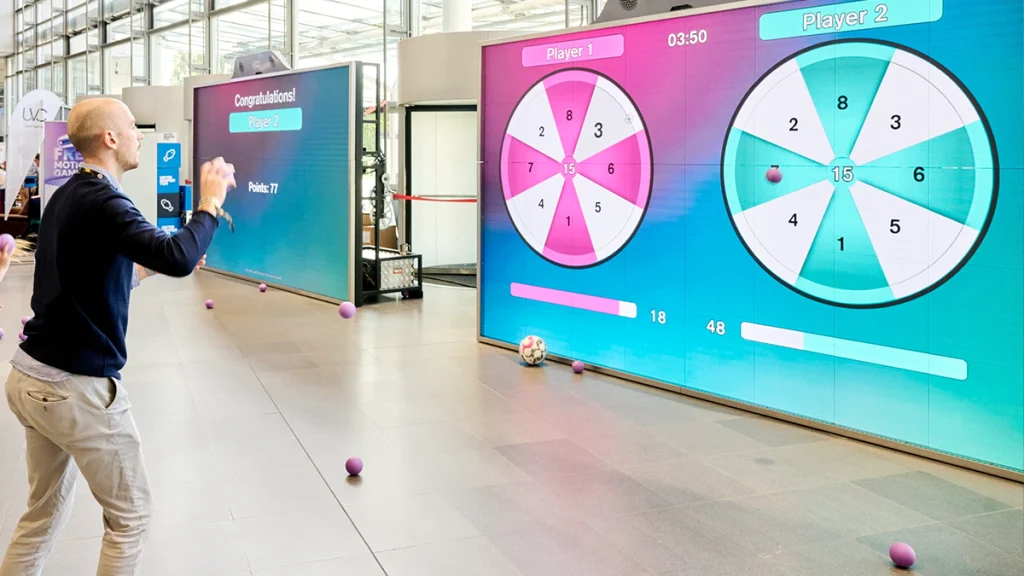
Gamification is a powerful way to attract attention in crowded environments.
Interactive games built into digital displays encourage visitors to participate in short challenges, quizzes, or skill-based activities.
Examples include:
- Spin-to-win promotional games
- quiz challenges
- reaction-time games
- digital scratch cards
These experiences are commonly used at events and trade shows because they naturally draw crowds and encourage participation.
Brands often reward players with discounts, coupons, or small prizes, which further increases engagement.
4. Motion-Based Interactive Installations
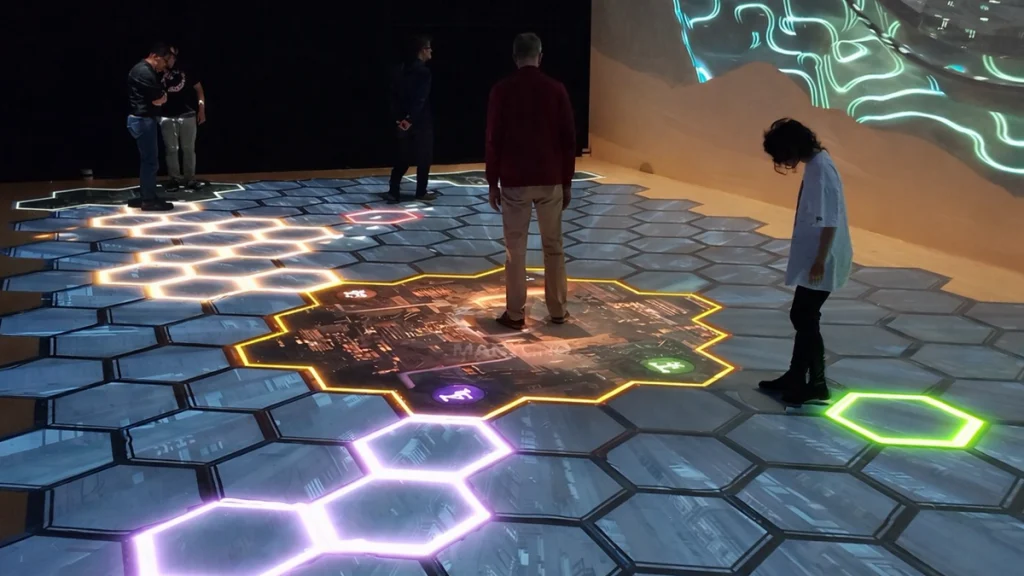
Motion sensors allow users to interact with digital content without touching the screen.
Instead, movement triggers the experience.
For example:
- walking past a screen triggers animation
- waving a hand changes content
- body movement controls visual effects
This type of installation is often used in public spaces where touch interaction may not be practical.
Motion-based systems create a sense of magic and curiosity, encouraging people to stop and explore.
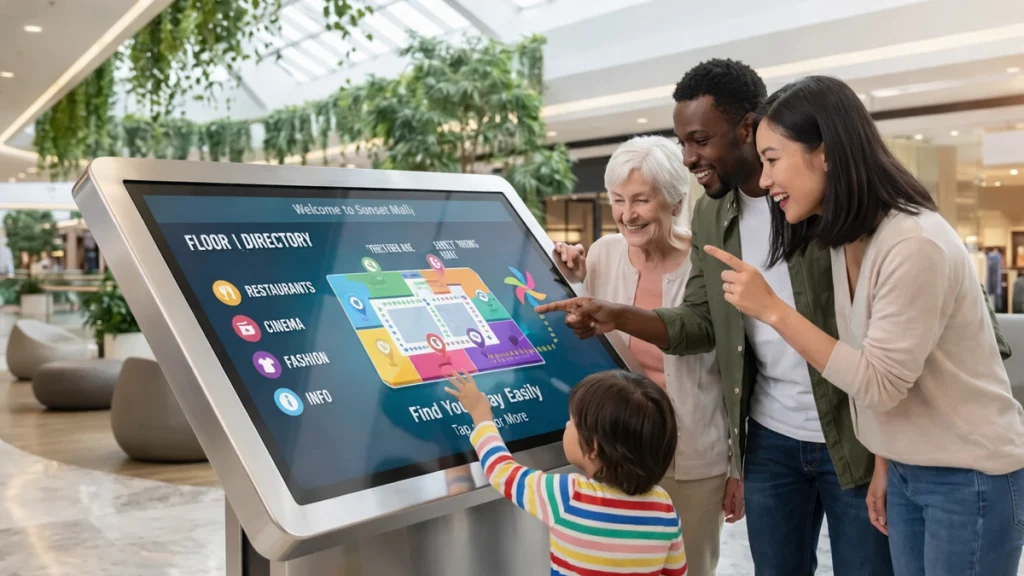
5. Digital Wayfinding Systems
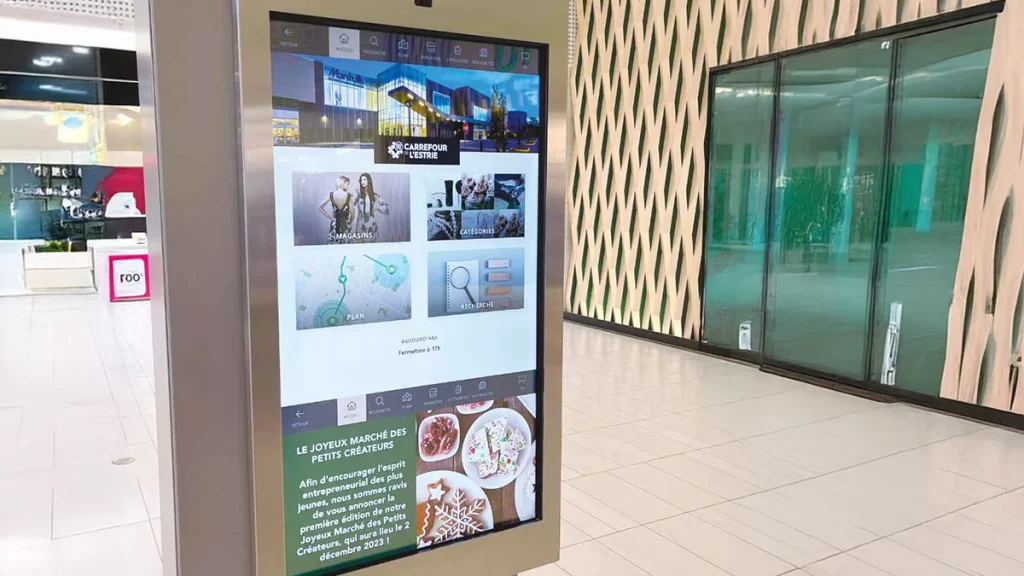
In large venues such as shopping malls, hospitals, and airports, visitors often struggle to find locations quickly.
Interactive wayfinding displays solve this problem by providing dynamic navigation tools.
Users can search for destinations and receive clear visual directions on the screen.
These systems often include:
- interactive maps
- store directories
- event schedules
- route guidance
Wayfinding displays improve visitor experience while reducing the need for physical signage.
6. AI Concierge Displays
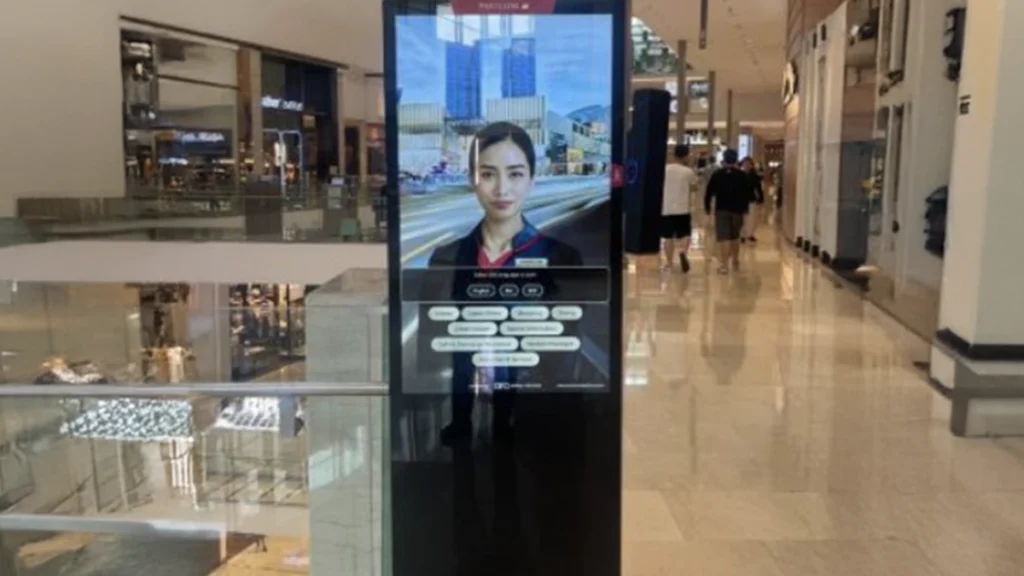
AI-powered concierge systems combine digital displays with artificial intelligence to provide real-time assistance.
Visitors can ask questions and receive information through conversational interfaces.
Typical use cases include:
- hotel lobbies
- shopping malls
- corporate buildings
- exhibition halls
An AI concierge display can help visitors find stores, recommend services, or provide event information instantly.
These systems create a modern and innovative impression while improving customer service.
7. Interactive Data Visualization Displays
Interactive data displays allow users to explore information visually.
Instead of presenting data in static charts, users can interact with graphics to reveal deeper insights.
This approach is often used in:
- corporate presentations
- smart city dashboards
- educational installations
- technology exhibitions
Users can zoom, filter, and explore data through touch or gestures, making complex information easier to understand.
Designing an Effective Interactive Display
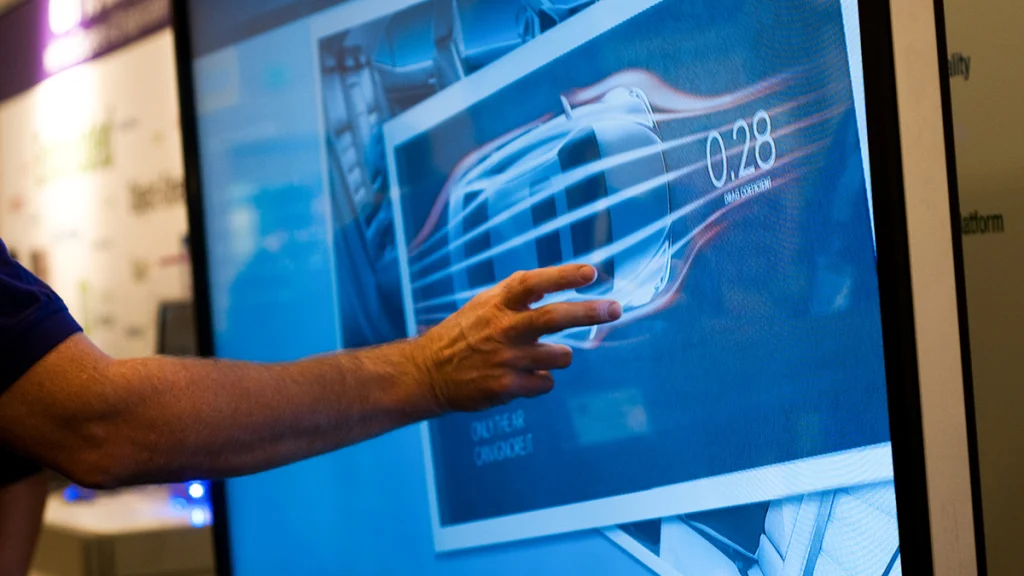
Creating a successful interactive display requires more than technology alone.
Several design principles should guide the experience:
Simplicity
Interfaces should be intuitive and easy to use. Visitors should understand how to interact within seconds.
Clear Objectives
Every interactive installation should have a clear purpose—whether it is to inform, entertain, or guide users.
Visual Impact
Strong visual design attracts attention and encourages people to approach the display.
Performance and Responsiveness
Interactive systems must respond quickly. Delays or technical issues reduce engagement.
When these elements are combined effectively, interactive displays become powerful communication tools.
The Future of Interactive Displays

The Future of Interactive Displays
- As technology evolves, interactive displays are becoming more immersive and intelligent.
- Emerging innovations include:
These technologies will continue transforming how brands communicate with audiences in physical spaces.
Instead of static screens, environments themselves are becoming interactive.
Conclusion
Interactive displays represent a major shift in how digital content is experienced in public spaces.
By encouraging participation rather than passive viewing, these systems capture attention, improve engagement, and create memorable experiences.
From touchscreen kiosks and immersive walls to AI concierge systems and gamified marketing displays, interactive technologies provide powerful tools for brands and organizations seeking to communicate more effectively.
As interactive technologies continue to advance, businesses that embrace these experiences will be better positioned to stand out in increasingly competitive environments.